
An RV can be parked neatly in the driveway all summer and still need a better long-term home. Sun hits the roof, rain runs down the sides, and a cover that looked generous in an online photo turns out to be too short for the ladder on the back of your motorhome.
Comparing metal RV carport prices and sizes is easier when you start with your rig's real measurements. The best carport is not necessarily the biggest in a catalog. It is the one that clears the vehicle, gives you usable access, fits the property, and meets the requirements for its location.
What Size Metal RV Carport Do You Need?
Write down the RV's overall length, width, and tallest point. Include mirrors, air conditioners, antenna housings, racks, rear ladders, and any accessories that stay mounted during storage. Factory brochure dimensions may not include every aftermarket addition.
Then plan extra room for parking and getting in and out. A carport that barely clears the vehicle might still make it awkward to open the door, load supplies, walk around the side, or wash the roof. If the RV is a fifth wheel or trailer, account for how you need to approach and position it.
Understand Width, Length, and Height Labels
Width is more than the body of the RV
Mirrors, slide-outs, entry steps, and access for maintenance can make the practical width greater than the closed vehicle's published width. Do not assume a 12-foot-wide shelter provides 12 feet of perfectly clear space between every structural component.
Length should include what sticks out
Rear ladders, hitches, spare tires, and bike carriers can affect the coverage you need. An RV that measures 29 feet without attachments may need a longer shelter once you account for accessories and comfortable parking.
Clear height is not the same as eave height
The listed side height and the usable clearance at the vehicle's path can differ, especially with gables, braces, headers, and uneven ground. Ask for the actual clear opening height and where it is measured before buying.
Compare Real RV Carport Examples
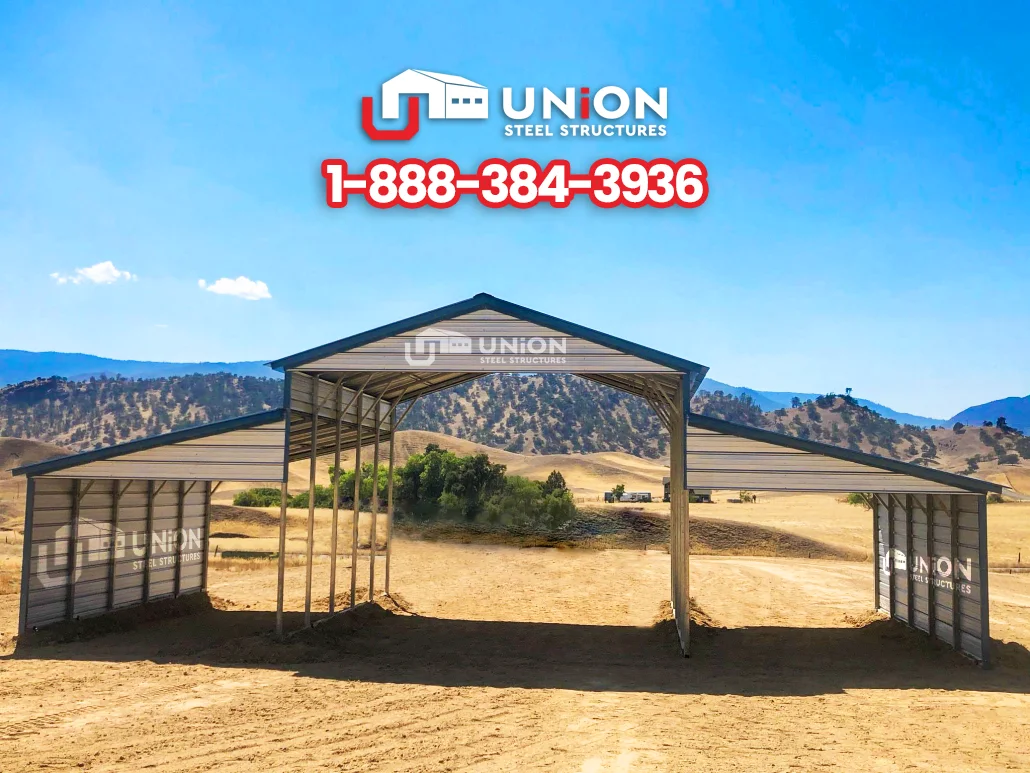
Union Steel Structures lists a 12×30×12 vertical-roof RV carport, an 18×40×12 boxed-eave model, an 18×45×13 regular-roof model, and a 24×40×12 regular carport among its published options. These are starting configurations, not a claim that each fits every RV.
A taller motorhome may require additional height. A longer fifth wheel may need extra length. If you want enough space to open slide-outs under cover, measure those extended dimensions as well. Ask the building specialist which options support your vehicle and local site requirements.
Which Roof Style Is Best for an RV Shelter?
Union Steel offers regular, boxed-eave, and vertical-roof RV carports. The vertical roof uses panels running toward the eaves, which helps channel water and debris down the slope. Boxed-eave and regular configurations have different appearances and may suit different budgets or weather conditions.
Do not select a roof style purely from the photograph. Roof span, site exposure, design loads, and the model's certified engineering all matter. In areas with significant rain or snow, discuss the roof type and structural requirements with Union Steel before finalizing.
Open, Partially Enclosed, or More Covered?
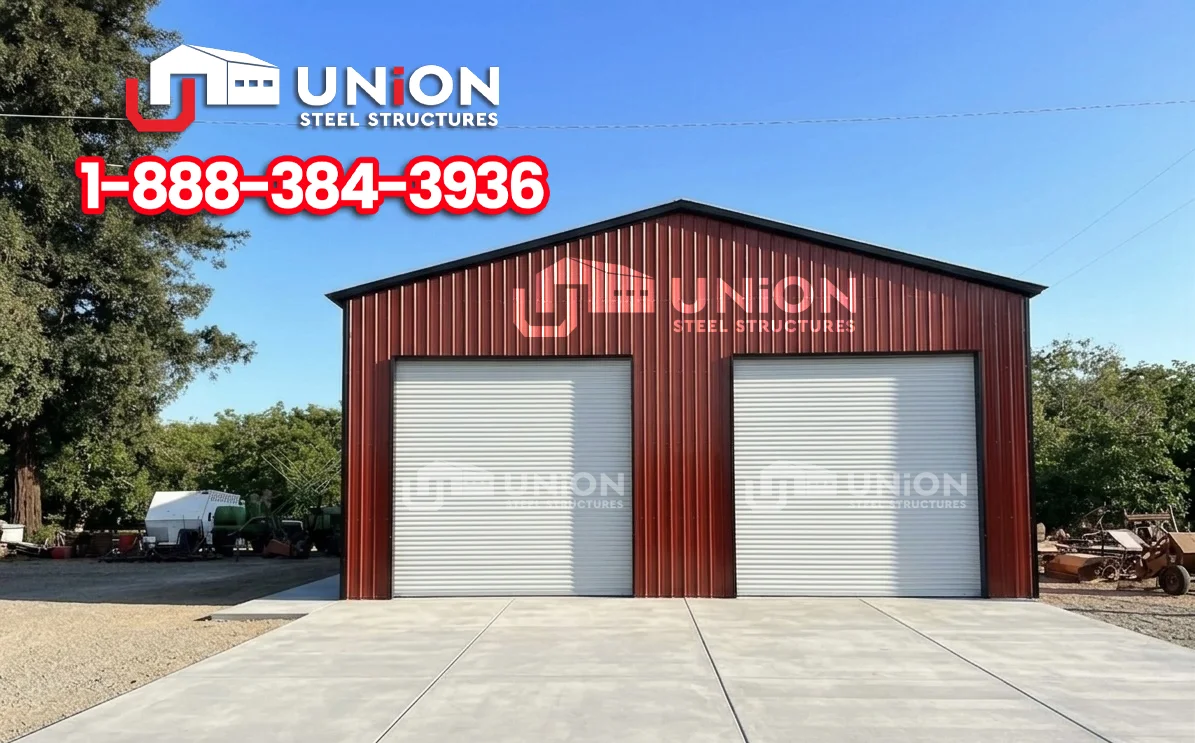
A roof-only RV carport provides overhead protection and airflow but leaves the sides exposed to wind-driven weather and sun. Side panels or end enclosures offer more coverage, yet they also change visibility, maneuvering space, ventilation, and the price.
The right enclosure depends on how long the vehicle will be stored and what you need to do around it. Think about doors, hookups, access to service compartments, and whether you need room to walk down both sides while the RV is parked.
What Affects Metal RV Carport Prices?
The biggest influences are the dimensions, roof type, enclosed areas, structural specifications, wind or snow certification, installation location, and optional features. Site preparation or permitting may be separate expenses. Union Steel states that basic roof-only RV carports start around $4,000, but a larger or more customized shelter can cost significantly more.
Do not treat a published starting price as a delivered quote for your property. Ask what the actual configuration includes, whether delivery and installation are covered in your area, what deposit is required, and whether financing or rent-to-own terms are available.
What Should the Site Look Like?
Union Steel says installation typically requires a level, accessible site. Parking an RV adds another consideration: you need a practical approach path, not just a flat rectangle where the roof will stand.
Check your driveway angle, turning room, gates, overhead branches, utility lines, and any slope that might reduce the clearance on one side. Confirm zoning, setbacks, applicable permits, and anchoring with the appropriate local authority and the installer before ordering.
A Simple RV Carport Buying Checklist
Before requesting a quote, bring the RV's exact outside dimensions, photos of its tallest equipment, the planned installation address, and a sketch of the parking approach. Decide whether you want open sides, partial panels, or an enclosed end, plus any future changes in vehicle size.
That information makes it much easier to compare two designs fairly. A cheaper quote that leaves out necessary height or certification is not the same product as a fully specified shelter.
FAQ
Is a 12-foot-wide RV carport wide enough?
It may be for some rigs, but usable access depends on the RV's full width, attached equipment, and desired walking space. Measure before choosing.
What height should an RV carport be?
Choose height from the tallest point of your actual vehicle, then confirm the structure's clear opening height. Do not rely only on the listed eave dimension.
How much does a metal RV carport cost?
Union Steel lists basic roof-only options starting around $4,000. Larger sizes, enclosure, certification, and location can change the final quote.
Can I add side panels to an RV carport?
Union Steel offers partial and full side or end enclosure options. Check how those features affect clearance and access.
Does installation come with an RV carport?
The client lists delivery and installation in many areas when the site meets requirements. Confirm exact inclusion for your address and configuration.
Can I finance an RV carport?
Union Steel offers financing and rent-to-own options, subject to available plans and eligibility. Ask for current terms.
Design a Better Parking Spot for Your RV
A carport should make owning your RV easier, not turn every parking attempt into a careful balancing act. Union Steel Structures offers customizable metal RV carports with several roof styles, height choices, and optional side panels.
Open Union Steel's 3D Builder to explore dimensions, then request a quote based on your RV, preferred roof configuration, and site. The right measurements up front will help you choose a building you can comfortably use.
Comments
Leave a Comment
Comments are reviewed before they appear.