
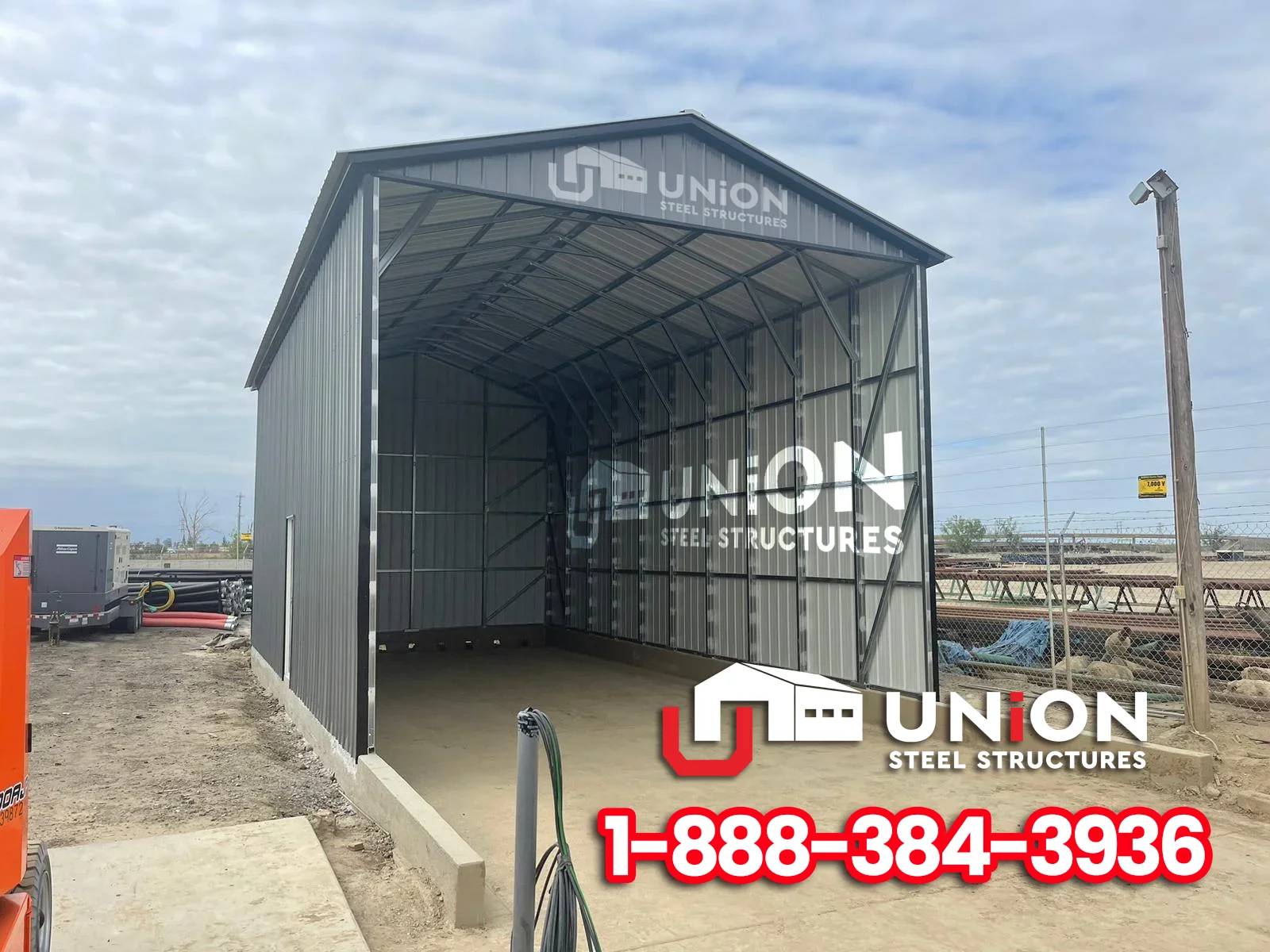
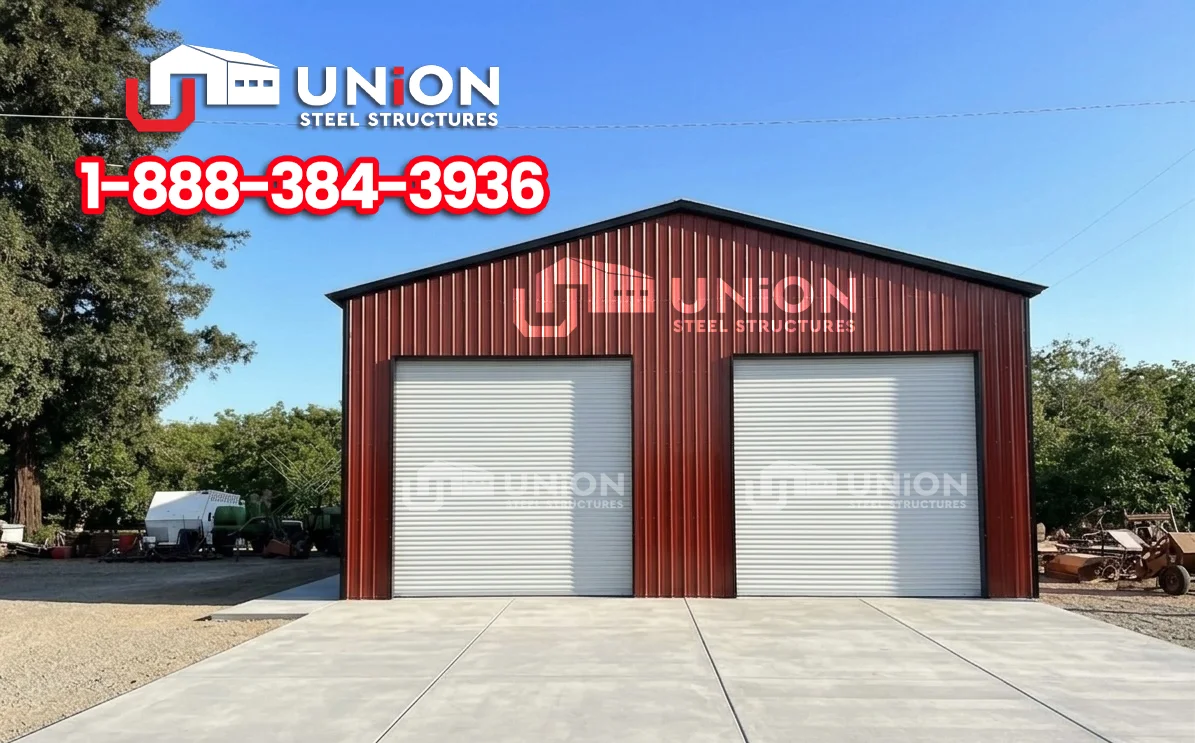
Enclosing a metal carport is one of the most practical upgrades a property owner can make. You already have the roof and the frame. Adding walls turns an open shelter into a secure, weatherproof space that works as a full garage, workshop, storage room, or utility building.
The process is straightforward, but it has a few decisions that will shape everything else: your wall material, whether you need a permit, and whether the existing carport frame can handle an enclosure without modification. Get those right upfront, and the rest of the project follows a predictable sequence.
This guide walks through each step of how to enclose a metal carport, covers the most common wall material options, explains when a permit is required, and gives you realistic cost ranges so you can plan before you buy.
Before You Start: Two Things to Confirm
Jumping straight to materials is a common mistake. Two questions need answers first.
1. Does Your Carport Frame Support Enclosure?
Not all metal carport frames are built to the same standard. Open carports are engineered to handle roof loads, but enclosing the sides changes the wind load profile of the structure. A solid wall catches wind; an open frame lets it pass through. Before adding walls, confirm with the manufacturer or a structural engineer that your specific frame is rated for enclosed use. Many pre-engineered metal carports from reputable suppliers are already certified for both open and enclosed configurations, but this is not universal.
If your carport was purchased with the option to add walls later, your supplier should have documentation confirming the frame's load ratings for enclosed use. Union Steel Structures builds carports to certified standards, so if you purchased through them, contact their team to confirm your specific unit's specifications before proceeding.
2. Do You Need a Permit?
In most jurisdictions, enclosing a carport triggers a building permit requirement. The reason is straightforward: an enclosed structure is legally reclassified from a carport to a garage in nearly every building code. A carport is defined as open on at least two sides; once you add walls that close off those sides, the structure becomes a garage and must meet garage code requirements for setbacks, fire separation from the main dwelling, and structural standards.
The permit process for a carport enclosure typically requires a site plan showing the structure's location relative to property lines, a description of materials, and in some jurisdictions, stamped engineering drawings. Contact your local building department before you buy a single panel.
Choosing Your Wall Material
Three materials dominate carport enclosure projects: steel panels, wood, and vinyl siding. Each has a different cost, skill requirement, and performance profile. The right choice depends on your budget, how you plan to use the space, and how you want the finished structure to look.
| Wall Material | Best For | Pros | Cons |
| Steel / Metal Panels | Matching original carport aesthetic, workshops, agricultural storage | Durable, low maintenance, weather-resistant, matches existing metal frame | Higher material cost, requires self-tapping screws and metal cutting tools |
| Wood (Plywood / T1-11 Siding) | Residential garages, workshops, spaces where insulation will be added | Easy to cut and fasten, accepts insulation directly, paint-ready | Requires sealing and periodic maintenance, susceptible to moisture and pests |
| Vinyl Siding | Residential settings where curb appeal matters | Low maintenance, resists moisture and rot, broad color range | Requires wood sheathing underneath, less impact-resistant than steel |
For most metal carport enclosures, steel panels are the most practical choice. They attach directly to the existing metal frame with self-tapping screws, match the material and appearance of the roof, and require no additional framing. Wood is a good option when you plan to finish the interior, add insulation, or want a surface that accepts paint and trim. Vinyl siding requires a wood sheathing layer underneath, which adds cost and complexity.
Step-by-Step: How to Enclose a Metal Carport
The following steps apply to a standard freestanding metal carport being enclosed with steel panels or plywood siding. Specific fastener types and framing requirements will vary based on your carport model and local code.
Step 1: Measure All Sides
Measure the height and width of each open side of the carport. Take measurements at the top, middle, and bottom of each opening, as frames can vary slightly. Record every dimension before ordering materials. Cut panels slightly smaller than the opening, not flush, to allow clearance for fasteners and any expansion gap required by your material.
Step 2: Pull Your Permit
Submit your permit application before purchasing materials or starting any work. The application will typically require a simple site plan, a description of materials, and your property address. Some jurisdictions process residential accessory structure permits within a few days; others take several weeks. Starting work before your permit is issued can result in a stop-work order and double permit fees.
Step 3: Plan Door and Window Placement
Decide before you order panels where any walk-through doors, roll-up doors, or windows will go. Ordering panels around openings is far simpler than cutting openings after panels are installed. A standard personnel door opening is 3 feet wide by 6 feet 8 inches tall. A single-car roll-up door typically requires a 9- or 10-foot opening. Mark these locations on your frame before ordering materials.
Step 4: Add Framing If Needed
If you are using wood siding or vinyl, you will need to install horizontal girts or vertical studs between the carport's existing frame rails to give the siding panels a nailing or screwing surface. Steel panels can often attach directly to the carport's existing horizontal rails without additional framing, but confirm this with your panel supplier.
Step 5: Install Wall Panels
Start at the bottom and work upward, overlapping panels per manufacturer instructions to shed water. For metal panels, use self-tapping screws with neoprene washers at every framing contact point to create a weathertight seal. For plywood, use exterior-grade screws and apply a bead of construction adhesive at the frame contact before fastening. Check for plumb and level alignment as you go; a panel that goes in crooked becomes harder to correct once adjacent panels are installed.
Step 6: Install the Door
Frame your door opening with pressure-treated lumber before hanging the door, even in a metal carport enclosure. This gives the door frame a solid, stable attachment point. For a roll-up garage door, follow the manufacturer's installation guide precisely, as spring tension systems carry significant stored energy and must be installed correctly. If you are not comfortable installing a roll-up door, this is the one step most worth hiring a professional to complete.
Step 7: Seal Gaps and Inspect
After panels and the door are installed, walk the perimeter and inspect every seam, corner, and panel edge. Apply exterior-grade caulk or weatherstripping to any gap where air or water can enter. Pay particular attention to the top edge where the walls meet the roof, the corners where walls meet each other, and the base where walls meet the floor or ground.
Step 8: Schedule Your Inspection
If your project required a permit, contact your building department to schedule the final inspection before considering the project complete. The inspector will verify setback compliance, structural fastening, and any electrical or fire separation requirements that apply to your jurisdiction. Do not install drywall, insulation, or interior finishes until after the final inspection, as inspectors need to see the framing.
Cost Ranges for Enclosing a Metal Carport
According to Angi's cost data, the average cost to enclose a one-car carport is around $2,500, with full conversions including a garage door running closer to $6,000 when the door, framing, and wall work are combined. Cost drivers include:
- Wall material: steel panels run roughly $2 to $5 per square foot for materials; plywood and T1-11 siding are similar; vinyl siding with sheathing runs higher
- Door type: a basic walk-through steel door costs $200 to $600 installed; a single-car roll-up garage door averages $1,200 installed
- Permit fees: typically $100 to $500 depending on jurisdiction and structure size
- Labor: $4 to $8 per square foot if hiring a contractor, or $0 if doing the work yourself
A straightforward DIY enclosure of a 20×20 carport with steel panels and a single walk-through door can often be completed for $1,500 to $3,000 in materials. Adding a roll-up garage door pushes that figure higher. Professional installation of the full project typically ranges from $3,000 to $8,000 depending on size and materials.
Frequently Asked Questions
Does enclosing a metal carport always require a permit?
In most jurisdictions, yes. Enclosing a carport reclassifies the structure as a garage under building code, which triggers a permit requirement. Rules vary by locality, so contact your building department to confirm before starting.
Can I enclose just one or two sides instead of all four?
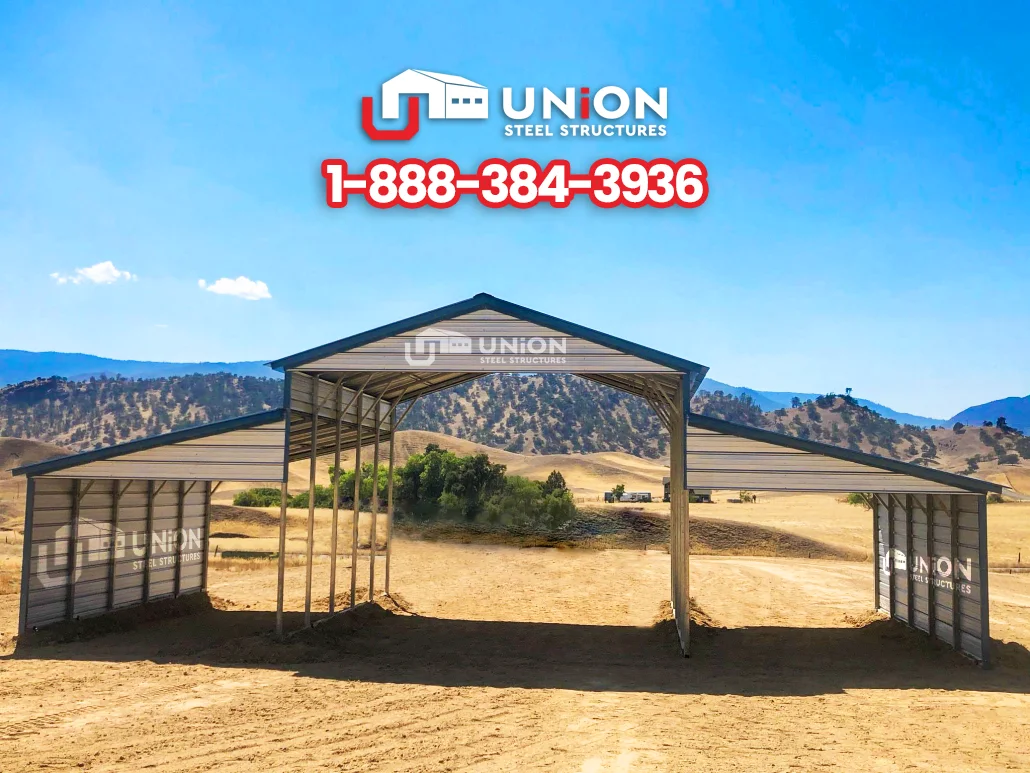
Yes. Partial enclosures are common and often do not trigger the same permit requirements as a full enclosure, though this varies by jurisdiction. Enclosing the back wall and one side while leaving the front and a second side open keeps the structure classified as a carport in many areas and provides meaningful weather protection without the full permitting process.
What is the easiest material to use for a DIY carport enclosure?
Steel panels designed for metal building systems are generally the most straightforward for a DIY enclosure of an existing metal carport. They attach to the existing frame rails with self-tapping screws, do not require additional framing in most cases, and match the existing structure aesthetically. Plywood siding is also manageable for someone with basic carpentry skills, though it requires more preparation and finishing work.
Will enclosing my carport increase my property value?
A properly permitted, code-compliant garage conversion typically adds value to a property. An unpermitted enclosure can have the opposite effect, as buyers and lenders flag unpermitted structures during the sale process. Always pull the permit before starting the work.
Do I need to insulate an enclosed carport?
Insulation is not required by building code for most accessory structures, but it makes a significant difference in comfort and utility if you plan to use the space as a workshop or spend time inside it. Closed-cell spray foam or rigid foam board insulation are the most effective options for metal walls and ceilings, as they address condensation as well as temperature.
When a New Enclosed Structure Makes More Sense
Enclosing an existing carport is a practical upgrade when the frame is certified for enclosed use, the structure is in good condition, and the location and orientation already work for your needs. But there are situations where starting with a purpose-built metal garage is the better path.
If your carport was not originally engineered for enclosed loads, if it is positioned in a way that creates setback problems after reclassification, or if you need a larger footprint than the current carport provides, ordering a new pre-engineered metal garage from the start gives you a certified structure, better design flexibility, and no retrofitting compromises.
Union Steel Structures builds custom metal garages, carports, and enclosed structures engineered to meet local code requirements and delivered ready for installation. If you are weighing whether to enclose your existing carport or invest in a new structure, contact Union Steel Structures today and a building specialist will walk you through both options.
Comments
Leave a Comment
Comments are reviewed before they appear.