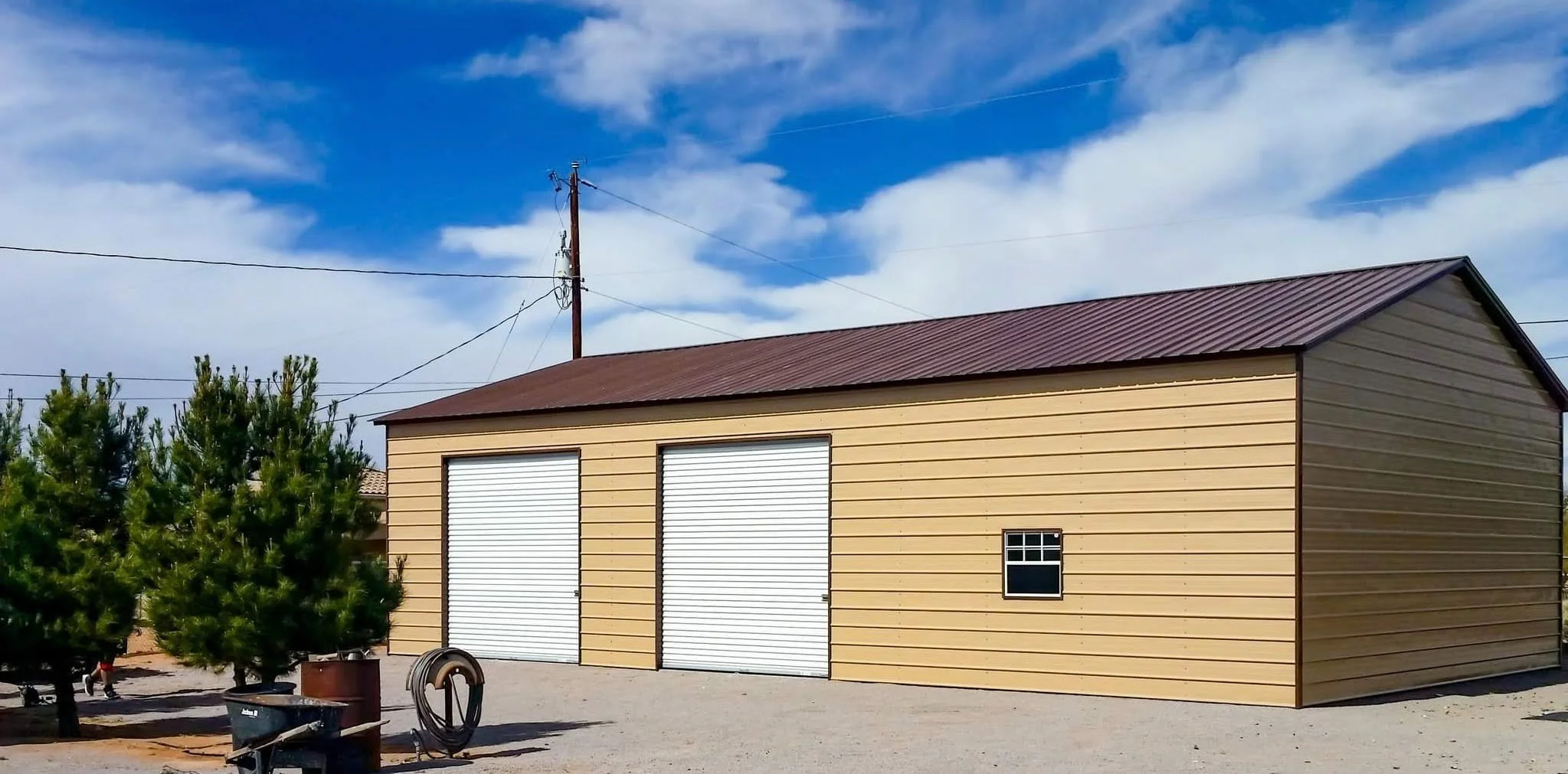
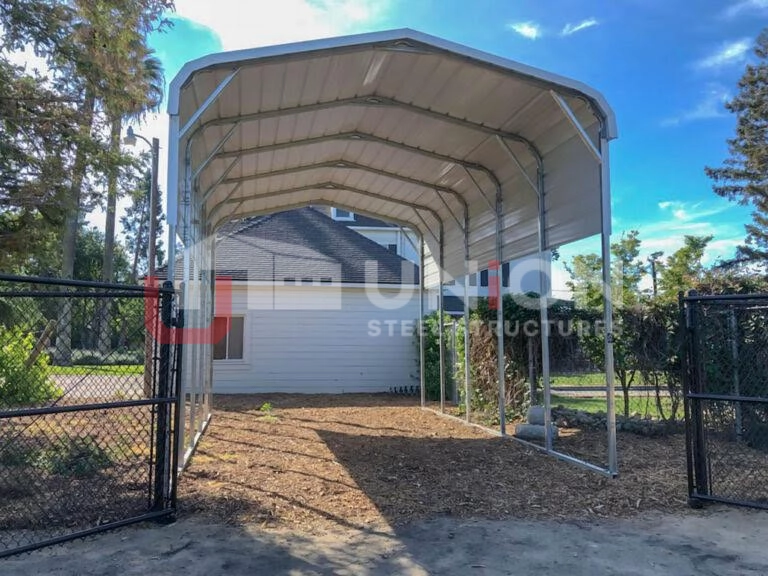
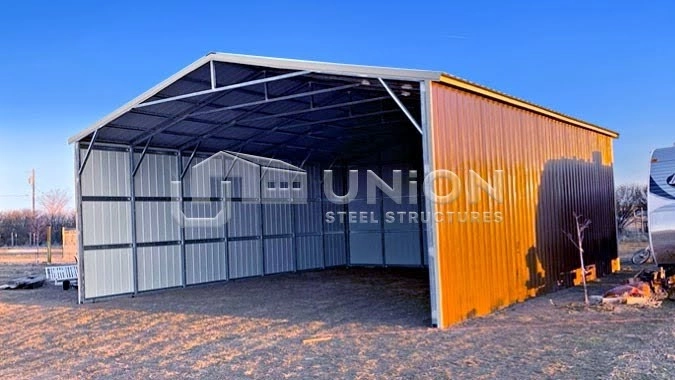
A building for every need.

Water dripping from the ceiling of your metal building is not a roof leak. That is a common first assumption, and it sends property owners looking for cracks, gaps, and failed sealants that do not exist. In most cases, what looks like a leak is condensation: moisture forming directly on the interior surface of cold metal panels when warm, humid air inside the building makes contact with them.
Condensation in a metal building is a solvable problem. But the fix depends entirely on understanding why it happens, because patching seams and adding caulk does nothing to address the underlying physics. This guide explains the cause, the four proven methods for stopping it, and how to choose the right combination of solutions for your specific building and climate.
Why Metal Buildings Sweat: The Physics in Plain Terms
Condensation follows one rule that never changes: moisture forms when warm, humid air contacts a surface that is at or below the dew point temperature. The dew point is the temperature at which air can no longer hold all of its moisture in vapor form; the excess precipitates out as liquid water on whatever cold surface it touches.
Steel is one of the most thermally conductive common building materials, meaning it transfers heat and cold very quickly. On a cold morning, the metal roof and walls of your building are close to the outdoor temperature. The air inside, warmed by sunlight, stored equipment, vehicles, livestock, or just overnight heat retention from the ground, carries moisture. When that warm, moisture-laden air rises and contacts the cold steel panels, it chills below the dew point, and water droplets form on the surface. The building is not leaking. It is sweating, the same way a cold can of soda sweats on a humid day.
According to ASHRAE Standard 62.1, indoor humidity should not exceed a dew point of 60°F. In a metal building with no insulation, no vapor barrier, and limited ventilation, that threshold is routinely crossed, especially in climates with cold mornings, high seasonal humidity, or active moisture sources inside the building such as machinery, livestock, or stored materials.
Why It Matters More Than It Looks
A little surface moisture seems like a minor annoyance. Left unaddressed, it is not. Condensation creates three compounding problems that get progressively more expensive to fix.
Rust and Corrosion
Persistent moisture on steel panels and fasteners initiates rust. Surface treatments and galvanized coatings provide significant protection, but they are not indefinite. Wet insulation held in direct contact with metal panels accelerates this process considerably by trapping moisture against the surface rather than letting it evaporate. Once fasteners begin to rust and panels develop pitting, the structural warranty on your building may be affected.
Mold and Mildew
Any insulation that absorbs and retains moisture becomes a medium for mold and mildew growth. This creates health risks for anyone using the space regularly and a persistent musty odor that is difficult to eliminate once established. ASHRAE recommends keeping indoor dew points at or below 60°F to prevent mold growth on building surfaces.
Damaged Equipment and Inventory
Water dripping from a sweating roof lands on whatever is stored below: vehicles, tools, equipment, feed, electronics, lumber. In an agricultural building, moisture damage to stored materials can represent a significant financial loss season after season. In a garage or workshop, it accelerates rust on tools and equipment and creates slip hazards on the floor.
The Four Methods That Stop Metal Building Sweating
Condensation control in a metal building comes down to four interventions. Each addresses a different part of the problem, and they work best in combination. The right mix depends on your climate, how the building is used, and what, if anything, is already installed.
1. Insulation: Keep the Metal Surface Warm
The most effective long-term fix is preventing the metal surface from reaching the dew point in the first place. Insulation creates a thermal break between the cold outside air and the warm, humid inside air, keeping the interior surface of the metal panels above the dew point.
Not all insulation types perform equally in metal buildings, and the wrong choice can make the condensation problem worse rather than better.
| Insulation Type | R-Value Per Inch | Vapor Barrier | Best For | Condensation Control |
| Closed-Cell Spray Foam | R-6 to R-7 per inch | Yes, built-in | Roofs, walls, all climates, maximum performance | Excellent; best single solution for condensation control |
| Faced Fiberglass Blanket | R-3 to R-4 per inch | Facing only; must be installed correctly | New construction, moderate climates, cost-sensitive projects | Good if vapor barrier facing is intact and properly lapped |
| Rigid Foam Board | R-4 to R-6.5 per inch | Requires separate vapor barrier | Supplemental layer over purlins to break thermal bridging | Good as secondary layer; not typically sufficient alone |
| Open-Cell Spray Foam | R-3.5 to R-4 per inch | No | Sound control; not recommended for condensation control | Poor; absorbs moisture and can worsen the problem |
| Unfaced Fiberglass | R-3 to R-4 per inch | No | Not recommended for metal buildings | Poor; absorbs water and promotes corrosion when wet |
Closed-cell spray foam is the most effective solution for an existing building with active condensation problems. It adheres directly to the metal surface, creates an airtight seal, and serves as its own vapor barrier. For 90% of metal building projects, faced fiberglass blanket insulation is the most practical choice for new construction; it delivers reliable thermal performance at a cost that makes financial sense at scale, provided the vapor barrier facing is correctly installed and all seams are lapped and sealed.
2. Vapor Barriers: Block Moisture Before It Reaches the Metal
A vapor barrier is a low-permeability membrane installed between the interior air and the metal panels to prevent moisture in the air from migrating to the cold metal surface. In new construction, it is typically integrated into the insulation system. In an existing building, it can be added as a standalone layer.
The most important installation detail with vapor barriers is continuity. A vapor barrier with gaps, tears, or unsealed seams at laps, penetrations, doors, and windows provides only partial protection. Moisture finds gaps. Every penetration, every seam, and every transition from wall to roof needs to be sealed for the barrier to perform as designed.
3. Ventilation: Remove Humid Air Before It Condenses
Insulation and vapor barriers reduce the chance that warm air contacts cold metal. Ventilation takes a different approach: it removes humid air from the building before the humidity level builds high enough to cause condensation. These two strategies complement each other and work better together than either does alone.
Passive ventilation using ridge vents, gable vents, or wall louvers allows warm, moist air to rise and exit the building through the roof while drawing cooler, drier air in at the lower openings. In buildings with significant internal moisture sources, including livestock, machinery, vehicle exhaust, or stored organic materials, passive ventilation alone is usually insufficient. An exhaust fan or ventilator mounted at the roof peak provides active air movement that passive venting cannot match.
The target is to keep interior relative humidity between 30% and 50%, the range recommended by ASHRAE Standard 55 for comfort and moisture control. A simple digital hygrometer, available at most hardware stores for under $20, lets you monitor humidity levels so you know whether your ventilation strategy is working.
4. Ground Moisture Control: Stop Water at the Source
In many metal buildings, a significant portion of the interior humidity does not come from the air outside at all. It rises from the ground. Soil releases moisture vapor continuously, and in a building without a proper vapor barrier beneath the slab, that moisture enters the building and raises the interior humidity level regardless of how well the walls and roof are insulated.
A polyethylene vapor barrier installed beneath the concrete slab during construction is the standard solution. In existing buildings where the slab is already poured without one, drainage management around the foundation perimeter, grading to direct surface water away from the building, and a gravel or crushed rock base under the slab provide meaningful reduction in ground moisture migration. In extreme cases, a dehumidifier is the most practical remediation tool once the building is already in use.
Diagnosing Your Building’s Specific Problem
Before committing to a solution, spend a few minutes diagnosing where your moisture is actually coming from. The pattern of condensation tells you a great deal.
- Moisture concentrated on the roof panels and ceiling: the primary driver is warm indoor air rising and contacting the cold roof. Roof insulation and a vapor barrier are the priority fix.
- Moisture on lower wall panels near the floor: ground moisture migration is likely contributing. Check whether a sub-slab vapor barrier is present and whether grading is directing surface water toward the building.
- Condensation appearing mainly during specific activities: active moisture sources inside the building, running engines, livestock, propane heaters, or wet materials being stored, are raising humidity above manageable levels. Improved ventilation and a dehumidifier address the acute spikes.
- Condensation across all surfaces during seasonal temperature swings: the building has no meaningful thermal break between inside and outside. Full insulation is the necessary fix, with ventilation as a supporting measure.
Frequently Asked Questions
Is metal building sweating the same as a roof leak?
No, and the distinction matters for how you fix it. A roof leak introduces water from outside the building through a physical gap or failed sealant. Condensation forms inside the building when interior moisture in the air precipitates onto cold metal surfaces. The water appears in the same place, dripping from the roof, but the source is entirely different. Before spending money on sealants and patching, check whether the problem persists on dry days. If it does, the source is condensation, not a leak.
Does condensation void my building’s warranty?
It depends on the manufacturer and the specific warranty terms. Most steel building warranties cover rust-through and panel perforation but exclude damage caused by condensation when the building was not properly insulated or ventilated. Review your warranty documentation and contact your supplier before significant moisture damage develops, not after.
Can I fix a metal building condensation problem myself?
Some interventions are DIY-friendly. Adding wall louvers or a ridge vent, improving drainage around the foundation, and installing a dehumidifier are all manageable without professional help. Spray foam insulation, however, requires professional equipment and application expertise. Incorrectly applied spray foam can trap moisture rather than stop it, creating a worse problem. For insulation work, hire a contractor experienced specifically with metal building systems.
Do anti-condensation coatings work?
Anti-condensation coatings are factory-applied or site-applied materials that absorb a limited amount of moisture and release it slowly as conditions change, reducing visible dripping. They are a supplemental measure, not a primary solution. A coating does not address the underlying humidity or temperature differential driving the condensation. They work best as part of a complete system that also includes insulation and ventilation.
How do I know if my insulation is making the condensation worse?
If you have existing insulation that is visibly wet, sagging, or compressed, it is no longer insulating effectively and is likely holding moisture against the metal. Remove and replace saturated insulation before it causes further corrosion. This is most common with unfaced fiberglass that was installed without a properly sealed vapor barrier. Replacing it with faced fiberglass installed correctly, or with closed-cell spray foam, resolves both the insulation failure and the condensation problem simultaneously.
Get It Right at the Start: Building Dry from Day One
The most cost-effective time to address metal building condensation is before the structure is ordered, not after you have a problem. A building specified with the right insulation system, proper ventilation provisions, and a well-designed foundation vapor barrier will perform dry for decades with minimal intervention.
Retrofitting insulation and ventilation into an existing building that was not originally designed for it is significantly more expensive and disruptive than specifying it correctly from the beginning. If you are planning a new metal building, garage, carport, or barn, the insulation and ventilation decisions are part of the design conversation, not an afterthought.
Union Steel Structures builds custom metal buildings, garages, barns, and carports engineered to your specifications. Contact the team today to discuss your project, and ask about insulation options and site preparation guidance to ensure your building stays dry from the day it goes up.
Get a Quote Online
We’re here to make sure you have what you need, when you need it. For more information on our steel buildings and metal structures, contact our building specialist and let us get started on your new project today!